Choosing hedging plants for a Kent garden.
A hedge is the one planting decision you live with for decades, so it pays to choose the plant for the ground you have rather than the picture in the catalogue. Kent makes that choice easier than most counties, because almost everything grows here, and harder, because the soils change so sharply from one parish to the next.
Start with the soil and the wind
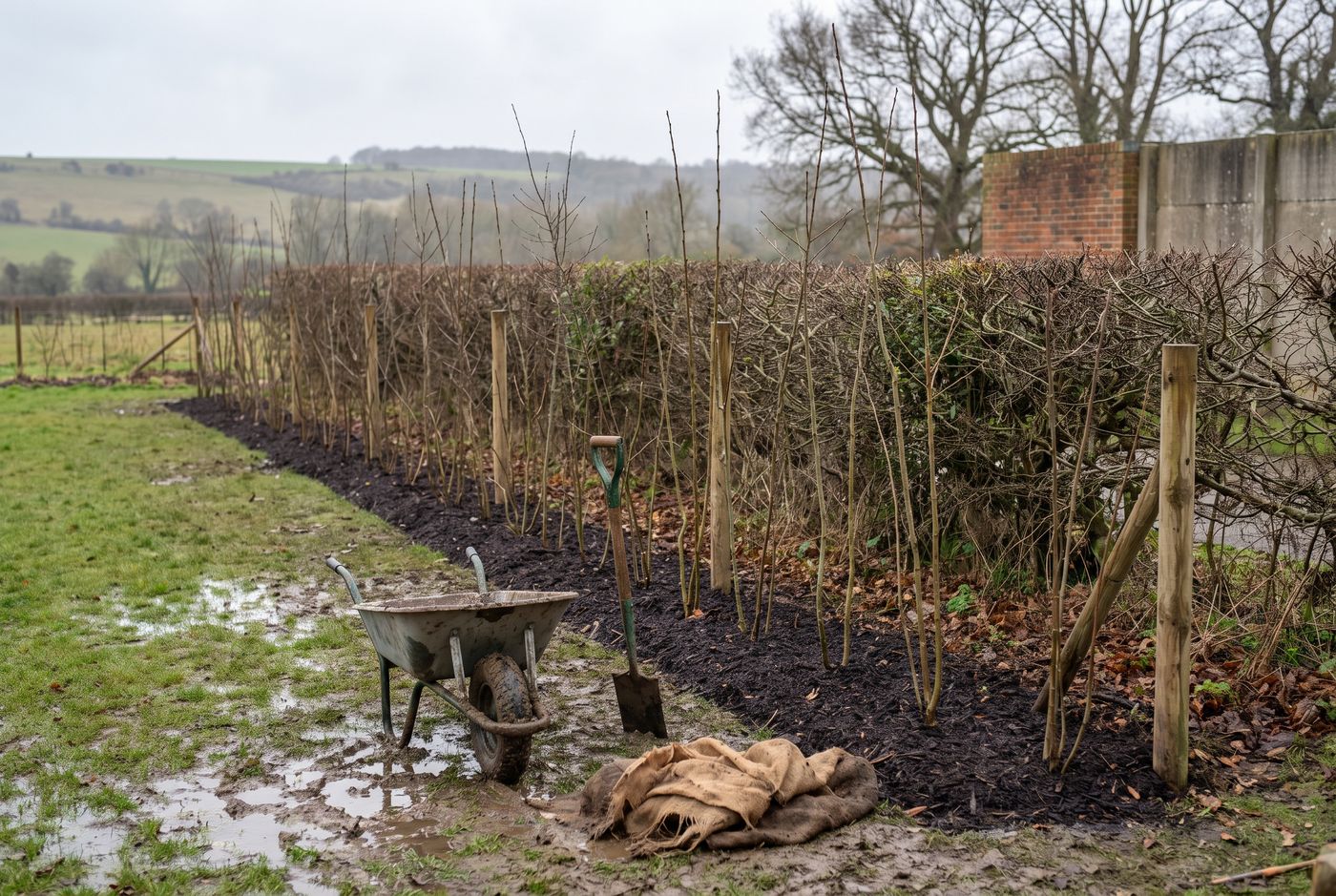
The chalk of the North Downs is thin, free draining and alkaline. Beech, hornbeam, yew, box and field maple are at home on it; cherry laurel and most conifers struggle in a dry summer. The Weald is heavier clay that holds water in winter, where hawthorn, hornbeam, holly, hazel and privet cope well and yew sulks if the roots sit wet. Along the coast, from Whitstable round to Romney Marsh, salt and wind decide the matter: tamarisk, sea buckthorn, escallonia, griselinia and elaeagnus take the exposure that scorches laurel and beech. On the greensand and in the orchard country around Maidstone, the soil is kind and the full range is open.
Formal, wildlife or working
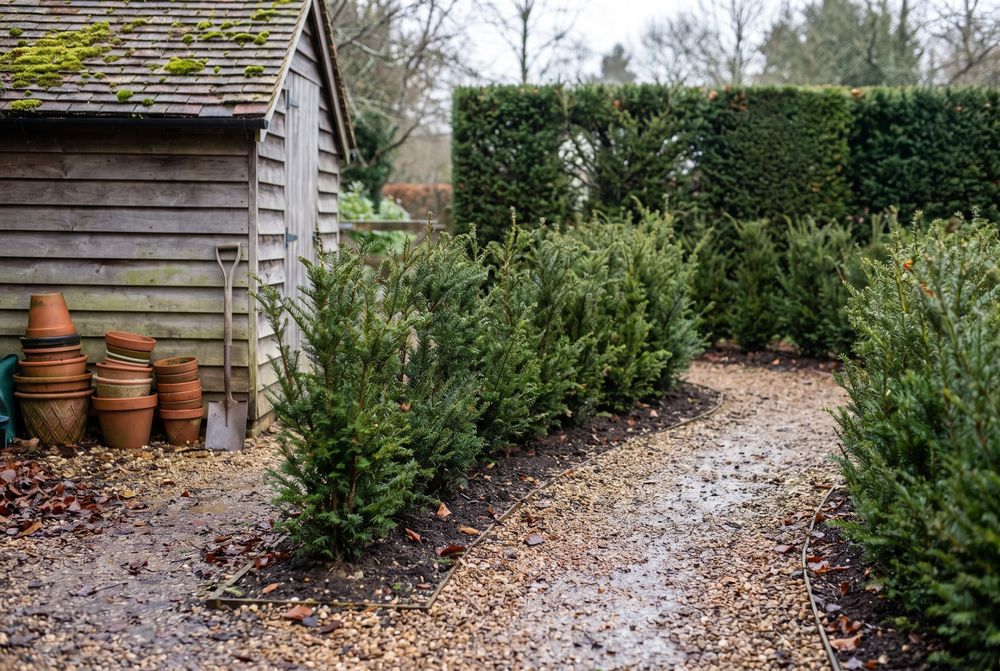
A clipped formal hedge wants a plant that tolerates regular cutting and stays dense: yew for the best result and the slowest growth, hornbeam and beech for a tall screen that holds its copper leaves through winter, box or its blight resistant substitutes for anything under a metre. A wildlife hedge is a mix, usually hawthorn with blackthorn, hazel, field maple, dog rose, spindle and guelder rose, cut on a two or three year rotation so it flowers and fruits. A stock proof or boundary hedge is hawthorn and blackthorn with a few hollies, planted thickly and laid once it is established.
Buy bare root in winter
Hedging is the one planting where the cheapest option is also the best one. Bare root plants, lifted from the nursery field between November and March, establish faster than pot grown stock, cost a fraction of the price and are the only sensible way to plant a hedge of any length. Order early, because the popular native mixes often sell out early in the season, and plant within a few days of delivery, heeling the bundles into a trench if the ground is frozen or too wet to work. Pot grown plants fill the gaps outside the bare root season and suit a short run of something evergreen.
Size and spacing
Smaller is better. A 40 to 60 centimetre bare root whip costs little, takes without staking and overtakes a larger plant within three years. Plant a single row at 30 centimetres for a formal hedge, or a staggered double row at 45 centimetres between plants for a thick native hedge, with about three plants per metre for a single row and five for a staggered double row overall. Cut the whips back by a third after planting; it feels wrong and it is the right thing to do, because it forces the branching low down that makes a hedge rather than a row of trees.
The first two years
Keep a metre wide strip free of grass and weeds, mulch it, and water through the first two summers if the spring is dry. Most hedge failures in Kent are not the plant or the soil but competition from grass in the first year. Trim lightly each summer to encourage density, and resist the urge to let the hedge reach its final height before you start shaping it.
Where to buy
For a hedge of any length it is worth going straight to the growers, though check whether they supply the public. Many wholesale nurseries that supply Kent's landscapers and estates list their hedging stock and prices by town on HortOS, so you can see who has the species and size you need before the bare root season opens.
Already have a hedge to look after? See when to cut a hedge: the nesting-season check and planting or renovating a native hedgerow in Littlebourne.